They showed so much promise. What happened to the Godwines? How did they lose their grip? Who was this Godwine anyway, first Earl of Wessex and known as the Kingmaker? Was he an unscrupulous schemer, using King and Witan to gain power? Or was he the greatest of all Saxon Earls, protector of the English against the hated Normans? The answer depends on who you ask.
He was befriended by the Danes, raised up by Canute the Great, given an Earldom and a wife from the highest Danish ranks. He sired nine children, among them four Earls, a Queen and a future King. Along with his power came a struggle to keep his enemies at bay, and Godwine's best efforts were brought down by the misdeeds of his eldest son Swegn.
Although he became father-in-law to a reluctant Edward the Confessor, his fortunes dwindled as the Normans gained prominence at court. Driven into exile, Godwine regathered his forces and came back even stronger, only to discover that his second son Harold was destined to surpass him in renown and glory.
Mercedes Rochelle is an ardent lover of medieval history, and has channeled this interest into fiction writing. She believes that good Historical Fiction, or Faction as it’s coming to be known, is an excellent way to introduce the subject to curious readers. She also writes a blog: HistoricalBritainBlog.com to explore the history behind the story.
Born in St. Louis, MO, she received by BA in Literature at the Univ. of Missouri St.Louis in 1979 then moved to New York in 1982 while in her mid-20s to “see the world”. The search hasn’t ended!
Today she lives in Sergeantsville, NJ with her husband in a log home they had built themselves.
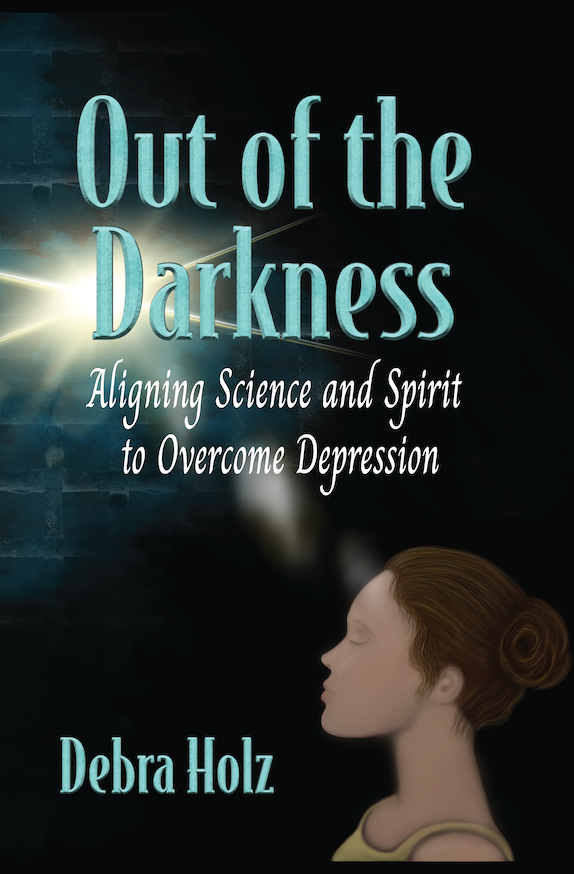
One woman's courageous journey from the darkness of depression to the light of awakening, healing, joy, and peace.
For 50 years, depression was an insidious tormentor that dictated what Debra Holz believed not only about herself but also the meaning and purpose of life, faith, love and death. Raised by a troubled mother and abusive father, she endured crippling emotional trauma that led her down a dark path of addiction and self-loathing. Decades of talk therapy and psychotropic drugs did little to abate her symptoms.
Determined to end her life, everything changed in 2013 when an internal voice whispered: What if there's another way to heal depression beyond traditional medical and psychiatric treatments? What unfolded was a way forward that revolutionized her thoughts, reframed her childhood events, and transformed her life. Holz candidly shares the step-by-step approach that she discovered and developed to rewire her brain and, thereby, her neurochemistry-ultimately leading to a deep joy and peace she had never known.
Out of the Darkness is for anyone who suffers with debilitating depression and is open to exploring the cutting-edge science of neuroplasticity. With an estimated 10 percent of Americans struggling with this condition, her book sheds valuable light on why the merging of science and spirit is critically important in overcoming depression. Holz is living proof that it's possible to triumph over it and emerge out of the darkness.
Praise for Out of the Darkness:
"Debra, you tell the truth and hold the darkness of shame up to the light, and that darkness just disappears. You are brave and courageous—not only for capturing your story but also for persevering and striving to be and do better and maybe to love and be loved. I am honored to know you and see a miracle right before my very eyes." ~ Carolyn L, Licensed Therapist
"Debra has a gift for knowing what readers want to read with her compelling writing style." ~ Roger Stuart, Editor
"While Debra's book did tell a very sad story, in the end, there was healing and recovery. I enjoyed reading that it is possible to overcome trauma." ~ C. Losey
"I thoroughly enjoyed reading Debra’s book on overcoming obstacles. She is a warrior! Debra mentions many resources she used to overcome her depression, and her autobiography is compelling." ~ Tammy A.
"Debra Holz takes us through the often horrifying journey of depression. She lays out the challenges she faced over a 50-year window. This book is a must-read for everyone and their loved ones struggling with depression. Debra gives us all hope." ~ Davis
Listen in as Debra shares some of her story:
Book Details:
Genre: Mental Health, Transformation, Neurolinguistics, Depression Published by: Indie Publication Date: December 2022 Number of Pages: 193 ISBN: 979-8351544625 Book Links:Amazon | Goodreads
Read an excerpt:
INTRODUCTION
As my eyes slowly flutter open, the blinding glare from the light on the sterile white ceiling causes me to wince. An I.V. bag dangles at the end of a silver pole, its line connected to a needle in my arm. I feel numb yet overwhelmed with despair. My mind is too groggy to comprehend what’s going on.
“Debra, do you know where you are?” a woman asks authoritatively.
I don’t. Wherever I am, the last thing I want is to be there, or anywhere.
“You’re in the emergency room at Western Psychiatric Hospital,” she explains, a bit more gently. I can see through dim eyesight that she appears to be a nurse. “Do you know why you’re here?”
I’m too sleepy to be concerned with her question. She pinches my arm hard to awaken me. I can see through the window that it’s dark, so it must be nighttime. Gradually, the fog clears as the nurse waits for me to respond. Obviously, my plan to kill myself had failed.
The impulse to end my life had consumed me since age 17, and it nearly did win the night before. My plan was firm: Drink enough wine to douse my fear, grab one of the loaded guns that my criminal defense attorney husband, Harrison, kept in our house, and shoot a bullet through my temple. For a decade leading up to this evening, I was too afraid to directly commit suicide, not knowing the possible spiritual consequences (if there is such a thing) in the afterlife. So, I routinely played an alcohol-and-sleeping-pill bedtime roulette, hoping that with the right spin of the sedative wheel, I wouldn’t wake up in the morning.
That fateful night, my drinking binge led to a blackout, which preempted my attempt to finish what I’d started. After I came to in the early morning hours, I told Harrison about my death intention. With a shrug of disgust, he walked into the other room, turned on the television, and proceeded to watch some sporting event. About six hours later, he drove me to Western Psychiatric Institute and Clinic.
The nurse pinches my arm once more, and that’s when I come to my senses and realize that, somehow, I’m still alive. I am deeply and acutely disappointed by this awareness.
What preceded this incident was fifty years of depression, an illness that told me what to think not only about myself but also the meaning of life, death, and the elusive truth about personal value and purpose. It dictated who I was, what to believe and how to feel. A faithful tormentor, depression refused to leave me alone no matter how much I pleaded and sometimes prayed to a deity whose existence I doubted. A merciless opponent, this illness was determined to enslave me with its chronic emotional and mental floggings. All those years, it never ceased and had no regard for how weary I had become.
My brain began wiring itself for depression from the early years of my childhood. Being in its clutches dominated my life by regulating how my brain functioned and allowed despair to overtake my other emotions. Through my teen years and well into adulthood, depression didn't care about my positive experiences, accomplishments, and other things that should have made me happy. It marred and even ruined what should have been joyous occurrences and events such as my advanced education, career success, dream house with my new husband, and my children's births.
If you suffer from depression, which I assume you might since you’re reading this book, you may feel as I did that there’s no escape from the misery. But there is. In fact, healing is possible. After a lifetime of suffering, I finally healed my depression outside of traditional medical methods. I reveal on these pages how I step-by-step revolutionized my beliefs, rewired my brain—thereby changing my neurochemistry—and created methods and habits to secure the longevity of my newfound joy and peace. Since 2014, I haven’t had an episode of depression! Hard to believe, isn’t it? I no longer doubt that it’s true and doable.
Healing through depression was, for sure, a spiritual awakening. As I grew through my healing process, my perception of the God I was introduced to as a child changed and expanded my consciousness. For clarification, when I use the word “God” within these chapters, it isn’t quite an accurate noun for what I consider “source, divine awareness, the creator.” So, for the sake of simplicity and since for many it’s common usage, I will say “God” interchangeably with these other terms.
My healing journey was a deep dive into the realms of science, as well. I share how quantum physics is relevant to healing depression, as well as how the brain works and how to rewire it away from depression. I also share emotional, spiritual, and behavioral exercises that, little by little, you’ll be able to integrate into your own life. As you take tiny then small steps at first, you’ll discover an increase in your life force energy. Eventually, you will be able to work on bigger and bigger tasks towards full healing.
First, let’s review a definition of depression and its ramifications. The Mayo Clinic describes depression as “a mood disorder that causes a persistent feeling of sadness … [that] affects how you feel, think, and behave and can lead to a variety of emotional and physical problems.” According to the World Health Organization, depression is a leading cause of disability; worldwide, it’s estimated that 264 million people suffer from it. Interestingly, more women experience depression and suicidal ideations than men, but men have higher rates of successful suicides. And the United States ranks as one of five countries with the highest numbers of depression sufferers. Though there may be other causes of depression, it is typically attributed to factors such as the brain’s faulty neurological mood regulation, genetics, emotional and physical trauma, childhood neglect and abuse, and major life stressors, including serious medical issues. What’s more, the National Institutes of Health reports that depression is associated with a higher risk of early mortality, and approximately 7.9 fewer years of life expectancy.
Unfortunately, those who haven’t suffered from depression sometimes expect a depressed person to just “snap out of it . . . stop the self-pity . . . think positive.” But when a person is clinically depressed, it’s typically impossible to “snap out of it” or simply solve the issue by thinking positively. While it may appear that a depressed person is self-pitying, they are usually filled with self-contempt and shame about their condition, as I was. And “recovering” without guidance and other forms of help is unlikely.
When I attempted to feel better, a haunting sadness assured me that I couldn’t escape the darkness and pain. As the years passed with no relief, the belief that something was intrinsically wrong with me and that I would never get better gained momentum. At the same time, I couldn't shake the sensation that disaster was right around the corner. I harbored the continuous terrorizing sense that I was in ocean-deep water with my chin just above the surface, dogpaddling like crazy so I wouldn’t go under. I knew that if I did, it would be the end of me.
I got plenty of traditional counseling over the decades, starting with my first therapist at age 17. I accepted what she and all my subsequent mental health professionals told me about my biologically based, supposedly incurable illness. For over three decades, the psychiatrists and therapists who considered me their patient insisted that only therapy and psychiatric drugs would help me gain power over my depression. Looking back, I believe that they truly wanted to help me. Yet, despite their efforts and my earnest attempts to feel better, I remained powerless. Though I functioned—at times scarcely or not at all—I passed through the decades barely engaged in life. For those who didn’t know me well, most of the time, I appeared to be functional and, well, “normal.” I completed my bachelor’s degree by age 21 and began my professional life, at which I succeeded, eventually owning my own company at age 29. At times, I appeared happy, I even had a sense of humor, and was talkative and outgoing; this was all a façade. From my outward appearance, I may have seemed fine; but inside, I was tormented. Only those closest to me knew.
By my late forties, the pain of depression and all the meds I was taking were not only emotionally but also physically debilitating. It occupied my mind and body. I could focus on nothing else. I dreaded the future and saw no possibility of relief ahead. It all culminated in 2007, when I intentionally drank too much wine and located Harrison’s gun. If he hadn’t taken me to Western Psych, I most probably wouldn’t have made it—which wouldn’t have been the worst-case scenario. In fact, despite my desire to be free from pain, I felt paralyzed and suffered terribly from my inability to follow through with suicide. Besides dooming my children, I envisioned that the horror of a failed attempt might render me conscious yet stuck in a useless, wordless body—and more disconsolate than ever. Being trapped with emotional and mental torment forever, unable to communicate or move—still not knowing what will happen when I die—would be, I imagined, the most inescapable torture of all.
This is what struck me as I slowly awakened in the emergency room at Western Psych and what eventually gave me the courage to find a better way, beyond traditional therapy and pharmaceuticals, to finally take control of my health, my mind, my life. It was, essentially, a turning point from dark to light.
That is why I've titled this book Out of the Darkness: Aligning Science and Spirit to Overcome Depression. Not only have I healed my depression through means outside of traditional mental health treatment, I’ve also been lovingly led into the light—a persistent, impenetrable condition of joy, contentment, and peace. For that, I am abundantly and endlessly thankful. It is nothing short of a transformation into a way of being that I had never dreamed was possible. Every morning, I awake joyful and grateful to have been gifted another depression-free day. As of this writing, I am eight years without depression’s malevolence. I still can hardly believe it. I marvel when life continues to throw difficult challenges my way, but I remain mostly unfazed.
I fear not because I know that I am beyond the risk of descending back into the darkness. Finally living fully and embracing life consciously, I now feel a sense of responsibility and purpose to share my experience with those who suffer with this dreadful/deplorable condition. My mission is to shed light on effective alternative ways to heal, so that others may emerge out of the darkness and enjoy lives of joy, health, and peace.
***
Excerpt from Out of the Darkness: Aligning Science and Spirit to Overcome Depression by Debra Holz. Copyright 2022 by Debra Holz. Reproduced with permission from Debra Holz. All rights reserved.
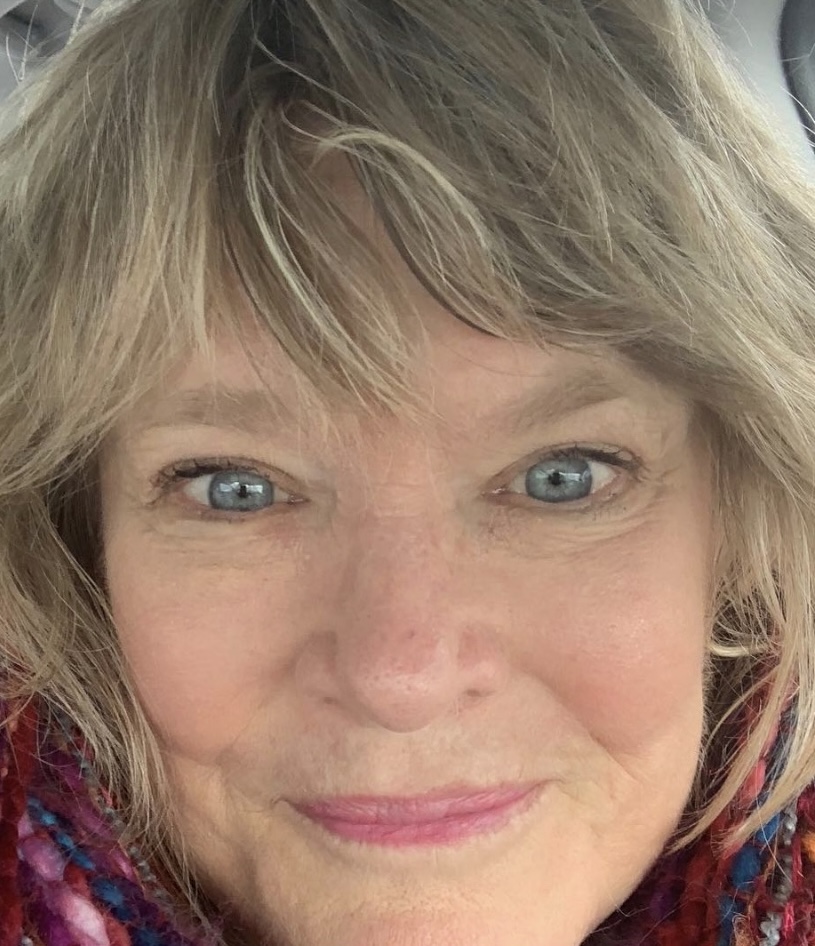
Debra Holz is the author of Out of the Darkness: Aligning Science and Spirit to Overcome Depression, which won The Authors’ Zone (TAZ) national award in the non-fiction category and achieved bestseller status on Amazon.
A natural storyteller, her book chronicles her 50-year struggle with major clinical depression and ultimately, how she healed her brain and balanced her neurochemistry beyond traditional psychiatric treatment. Using neuroplasticity techniques she developed and a major change in her underlying beliefs, she rewired and healed her brain and has been depression free since 2014.
It is her passionate mission to share her story with as many depression sufferers as possible so they too may heal themselves.
Debra has been a successful freelance writer and journalist since 1985. Besides her talent for direct response creativity, she is known for her expertise in legal content for major law firms as well as the technology and computer industry, banks, and investment corporations. She also has written for many major city newspapers.
A startling revelation that threatens to destroy their closest relationships. A secret that speaks to who we are—and who we hide. A choice that threatens their future.
Outfitting a wedding barn and planning Becca’s reception has Quinn furiously busy and—except for a stinging writing rejection—optimistic. But when Octavia calls with an urgent plea, Jonathan sees red. Until the arrangement Quinn proposes thrusts him into the role of accidental dominant, taking them to stratospheric heights of pleasure—and closeness.
Then a shocking discovery forces an impossible choice, a choice that threatens to end their relationship for good. Is the chasm of hurt and betrayal too wide? Is their story over, or can they find their way back to one other?
Shocking and intensely emotional, Entirely delivers a surprising conclusion to the first trilogy in the Transformation Series. Note: The series contains older characters, super-steamy bedroom (and other places) scenes, strong language, and mature themes.
Entirely is Book 3 in the Transformation Series. The books are not meant to be standalones; they should be read in order.
Talya Blaine writes later-in-life contemporary romance that’s emotionally intense and thought-provoking, spicy and sweet. She writes “older” characters (40+), sexy beta heroes, and explores how relationships of all types change over time. Silently (Transformation Series Book 1) is her debut romance, with Secretly (Book 2) and Entirely (Book 3) completed and releasing soon.
Will romance hit its mark when true love is the target?
Desperate for a fresh start, Rena Burke journeys from Texas to Oregon with only her father’s pistol and a plodding old mule for company. She takes a job working with explosives at a mine, spends her free time emulating her hero Annie Oakley, and secretly longs to be loved.
Saddle maker Josh Gatlin has one purpose in life and that is his daughter. Gabi is his joy and the sunshine in his days. Then he meets a trouser-wearing woman living life on her own terms. Rena is nothing like his perception of what he wants in a wife and mother for his child, but she might just prove to be everything he needs.
When tragedy strikes, will the two of them be able to release past wounds and embrace the possibilities tomorrow may bring?
To make sure she hadn’t lost the skill, she arranged the cans on fence posts on either side of the heart she’d painted on the bark, took out her pistol, moved back several yards, and loaded rounds into the cylinder.
After widening her stance, she lined up her first shot, released a breath, and pulled the trigger.
The sound of the bullet pinging the target rang out as the can flew backward off the post. Rena shot the remaining cans, then smiled with satisfaction as she climbed over the fence to retrieve them. She set them back up on the posts, and rested for a minute on the top pole of the fence, face turned to the sunshine as she soaked up the warmth. Then she hopped down and riddled the cans full of more holes before she stowed her gun in the gun belt and draped it over a fence post. Reverently, she lifted the pistol with the delicate pink handle from where she’d set it on a stump.
“Promise of true love,” she whispered, rubbing her thumb over the handle before she loaded five shots in the revolver and took aim at the target she’d painted. “True love. What an absurd notion. Laura really should mind her own business and cease meddling in mine. If she thinks this gun will lead me to romance, she needs to have her thinker checked for defects. Instead of dreaming of true love, setting love on a target seems like a much better idea.”
She blasted five holes in the middle of the white circle she’d painted inside the heart on the slab of bark, taking a great deal of satisfaction in blasting holes into something that represented romance and love, at least in her mind.
“Now that’s some fine shooting, Miss Burke.”
Rena yelped in surprise and spun around, the pistol still in her hand, as she pointed it at the intruder who dared to interrupt her target practice.
USA Today Bestselling Author Shanna Hatfield writes sweet romances rich with relatable characters, small town settings that feel like home, humor, and hope.
Her historical westerns have been described as “reminiscent of the era captured by Bonanza and The Virginian” while her contemporary works have been called “laugh-out-loud funny, and a little heart-pumping sexy without being explicit in any way.”
When this farm girl isn’t writing or indulging in rich, decadent chocolate, Shanna hangs out with her husband, lovingly known as Captain Cavedweller. She also experiments with recipes, snaps photos of her adorable nephew, and caters to the whims of a cranky cat named Drooley.
To learn more about Shanna or the books she writes, visit her website http://shannahatfield.com or find out more about her here: linktr.ee/ShannaHatfield
Publisher: DX Varos Publishing (March 7, 2023)
Category: Literary Fiction, British and Irish Literary Fiction, Historical Fiction
Tour Dates March 13-April 11, 2023
ISBN: 978-1955065702
Available in Print and ebook, 396 pages
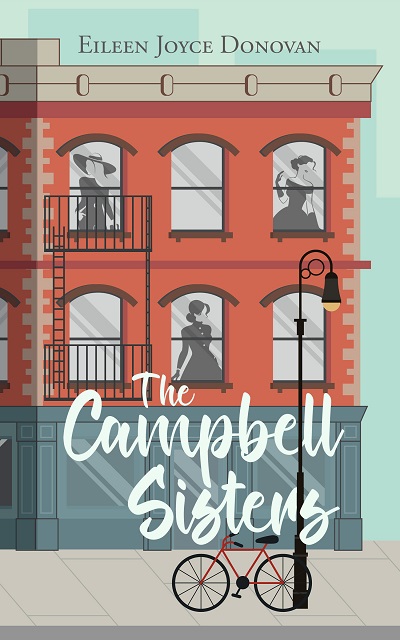
Description Campbell Sisters by Eileen Joyce Donovan
Helen Campbell is the eldest and most practical of three sisters, daughters of hard-working Irish emigrants living in New York City in the 1950s. She does what she can to keep the wild-child middle sister, Carolyn, in line and support the youngest, Peggy, as she pursues her dreams of becoming a doctor. Then Helen meets Charlie.
While it's love at first sight for those two, Carolyn’s antics threatens to derail all the sisters’ future happiness. However, through thick and thin, the three sisters strive to prevail, though not necessarily in the ways they thought they wanted.
Excerpt Campbell Sisters by Eileen Joyce Donovan
In this excerpt
from The Campbell Sisters, Helen is waiting up for her sister Carolyn, the
wild-child of the three sisters, to come home after her date.
“Thanks,” Carolyn said, climbing through the
window.
Helen stood in front of
her, arms folded across her chest, her lips pulled tight into a slash across
her face.
“Where have you been?”
she said through gritted teeth. Carolyn froze.
“What?” She looked into
Helen’s eyes, now steel blue daggers. “Oh, don’t be ridiculous,” Carolyn said,
pushing past her.
Helen reached out and
grabbed Carolyn’s arm. “You’re not putting me off that easily,” she hissed. “I
saw you tonight at Stillman’s and I want to know who that man was.”
Carolyn’s eyes widened.
“You were there?”
“Yes. On a legitimate
date. Not sneaking around with a married man, like you.”
Carolyn’s mouth dropped
open, but she said nothing. She pulled her arm away from Helen and strutted
over to her bed.
“What I do is none of
your business,” she said, undressing.
“You couldn’t be more
wrong.”
“Sorry you don’t believe
me, but it’s true.”
“What do you think Dad’ll
do if he finds out you’re gallivanting around town with a married man?”
“He won’t. Unless you
tell him.”
“You know I won’t do
that, but you owe me an explanation. And Peggy.”
“Peggy? She doesn’t know
anything. Unless you blabbed. Couldn’t keep this juicy little tidbit to
yourself? Just had to tell someone?”
“I didn’t need to. She
already guessed your dirty little secret.”
“What? How?”
“The night you came home
at two o’clock. She’s not stupid. It didn’t take much for her to put two and
two together.”
“Well, so now she knows,”
Carolyn said, slipping into her pajamas. “At least now I don’t have to keep it
a secret anymore. That gets really tiresome.”
The slap across her face
echoed around the room. Carolyn staggered backwards and grabbed the dresser to
stay on her feet. Tears welled in her eyes as her cheek blossomed into a fiery
red blotch. She raised her hand to cover it and stared, horrified, at Helen.
“You slut.” Helen turned
her back on her sister and climbed into bed.
Carolyn never moved as
Helen turned out the light, plunging the room into darkness, although she knew
she wouldn’t sleep that night. Her stomach churned and she swallowed hard,
afraid she’d be sick before she could get to the bathroom. She had never hit either
of her sisters in anger until tonight. Even after all Carolyn’s antics, she
always found a reason to forgive. But tonight was different. Something had hit
Helen deep in her gut when she saw that ring. She thought about all the bastard
babies at the Foundling and the women who left them there because they had no
other viable options. Something she didn’t like to think about.
Carolyn’s behavior went
against all the rules Helen had followed her entire life. But Carolyn never
played by the rules. She looked for ways to defy them. And now, she had
flaunted that defiance in her sister’s face. In some strange warped way, in
Helen’s mind, Carolyn had crossed the line and there was no forgiveness this
time.
“Helen?” Carolyn’s voice
trembled. “Helen, are you still awake? I need to explain.”
Helen bolted upright in
her bed. “Explain! There’s nothing to explain. There’s no way you can talk
yourself out of this one. I can see now I never should have let you slide all
these years. I should have told Mom about all the things you’ve done and the
people you’ve been with and let her, or Dad, deal with you. I thought you’d
grow up and come to your senses. But you’re as willful and headstrong as you
were when you were twelve years old. I’m done protecting you. You said it yourself
the other day. You want men to desire and take care of you. A high-priced
prostitute. Seems like you’re on the right path, Carolyn. Good luck. You’ll
need it. Just don’t come crawling to me or Peggy asking for help when you wind
up in the gutter with the rest of the trash.”
Carolyn stood next to
Helen’s bed, tears streaming down her cheeks. “You don’t understand,” she
whispered.
“Oh, really? Did he tell
you his wife doesn’t understand him? That he’s getting separated, or
divorced, very soon? That he can’t leave right now because of his kids? I
didn’t think you were naïve enough to fall for any of those lines. Men have one
aim in mind when it comes to pretty young women. And I see the results every
day when a nurse brings a newborn into the nursery. Is that what you want? If
so, you’re well on your way. So now, tell me what I don’t understand.”
Carolyn crumpled onto her
bed like a marionette with broken strings.
“I’m all ears,” Helen
said.
Carolyn looked at her,
the defiant glare back in her eyes. “Did anyone ever tell you you’re a real
bitch?”
Helen smiled.
“Frequently.” She lay down and pulled up her sheet.
The next morning, the family sat around the
kitchen table eating their cereal. Carolyn kept glancing over at Helen, waiting
for her to drop the bomb that would expose all her lies. Instead, everyone
chattered on as usual, talking about their plans for the day. By the time their
mother poured the coffee, Carolyn had broken out in a cold sweat and her hand
trembled as she lifted the coffee cup to her mouth.
Aggie noticed that, as a
mother would, and asked, “Carolyn, are you sick, love? You’re all sweaty and
shivering.”
“No, Mom, I’m fine.” Her
mother looked at her with arched eyebrows. “Really. I’m fine.”
“You don’t seem fine to
me.” Aggie reached over to put her hand on Carolyn’s forehead. But Carolyn
pulled away from her touch.
“Now, Aggie,” Paddy said,
“she’s probably just suffering from the too much whiskey she had last night. Am
I right, Carolyn?”
Peggy choked on the
mouthful of coffee she had just sipped, Carolyn’s face turned red, and Helen
sat with a smug smirk on her face.
“You could do with some
hair of the dog this morning, couldn’t you?” he asked.
“No, Dad. I’m fine.”
His icy blue eyes stared
at her over the rim of his coffee cup. “Well then, since you’re so fine, why
don’t you tell all of us where you were last night and what kept you out till
all hours of the morning and why you felt the need to climb up the fire escape
instead of using your key and coming in the front door like any civilized
person would do?”
What do you get when you take three headstrong,
independent and highly individual 20-something sisters and put them together in
one bedroom? You get 'The Campbell Sisters,' a new historical fiction/romance by
author, Eileen Joyce Donovan that asks the question, how far are you willing to
go for your sister?
The Campbell Sisters consist of Helen, the oldest,
Carolyn, the middle child, and Peggy, the youngest. All three sisters live with
their parents in an apartment in New York City and all three are interested in
different pursuits. For instance, Helen is working with orphans at a school in
Manhattan and Peggy is attending medical school in the hopes of one day
becoming a doctor. However, middle child Carolyn remains a bit of a wild card.
The book is set in 1955 and apart from formerly
hanging out with prostitutes, Carolyn has now been spotted dating a married
man. Of course, Helen is disgusted by her sister's behavior, and, late one
night, the two get into an altercation about it that is unfortunately overheard
by their parents.
Having to admit to what the fight was about; Carolyn
is then kicked out of the apartment by her father and must scour the city for a
place to stay while she pulls herself together.
Luckily, despite their fight, Carolyn has the help of both
of her sisters and a friend, to find a place to live in a all women’s
rental. She also receives lots of unsolicited
advice from her sisters on how to get back into their father’s good graces and
perhaps, not have to move after all. But will she take this opportunity to get
back in her family's good graces? Only time will tell, and you will have to
read the book to find out what exactly happens.
I highly recommend this novel for anyone who loves a
good, highly detailed. historical fiction. This is one that you will not regret
picking up! I loved it and couldn’t put it down.
Awards and Praise for Eileen Joyce Donovan
2019 Marie M Irvine Award for Promises, 2021
When Word Count competition for A Lady Newspaperman’s Dilemma
“This story is well written and immerses the reader in the period rooting for Alex. At times, I found her decisions a bit rash, but I remembered myself fighting for my career in a male-dominated field. The story is well-researched, and I enjoyed it immensely.”- Carol Amorosi, Author of The MacKay Mysteries, Series
“It was compelling to read of the mores of the time: school teachers couldn't drink in public, staying at a boarding house came with a set of restrictive rules and trying to get lead stories in a newspaper entailed being part salesperson/part private investigator.
With the role of newspapers and reporters being in the news of late, this depiction of a young woman learning the ropes in a competitive, male dominated field was fascinating in the scope of how tough it is to get a story right.”- Susan Wands, Author of Magician and Fool
“I don't normally read historical fiction, but I so enjoyed this book set in the 1920's. The theme is timeless as the main character is determined to make it in a man's world. Great read!”- Stacy Wilder, Author of A Liz Adams Mystery, Series
“The characters and fast paced plot drew me in and kept me reading. I enjoyed the historical details and the fact that every time I thought I knew how a character would react, I was wrong. The author is too skilled to fall into stereotypes.”- Grammarian, Amazon Review
Eileen Joyce Donovan has been writing her entire life, in one way or another, whether it was imaginative stories for friends, or advertising copy for clients. At the persistent urging of her husband, she finally agreed to seriously edit and revise one of her stories and take the plunge. Years later, her persistence paid off and both her debut historical fiction, Promises, and her second novel, A Lady Newspaperman’s Dilemma, won prestigious awards. Her short stories have appeared in several anthologies, and her essays have been included in various Chicken Soup for the Soul editions.
She lives in Manhattan, New York and is a member of Authors Guild, Women’s National Book Association, Women Fiction Writers Association, and The Historical Novel Society.